
Why Simulator-Based Utility Locator Training Changes Field Performance
Bridging the gap between classroom learning and real-world utility locating.
In a previous post, we explored the utility locating training gap: the difference between technicians who complete training and those who are truly field-ready.
The next question is an important one: What helps bridge that gap?
For many organizations, the answer has traditionally been experience gained on the job. While field experience is essential, relying solely on real projects to develop critical decision-making skills can expose crews, infrastructure, and organizations to unnecessary risk.
That's why more industries, from aviation to healthcare to heavy equipment operations, have embraced simulation as a critical part of workforce development.
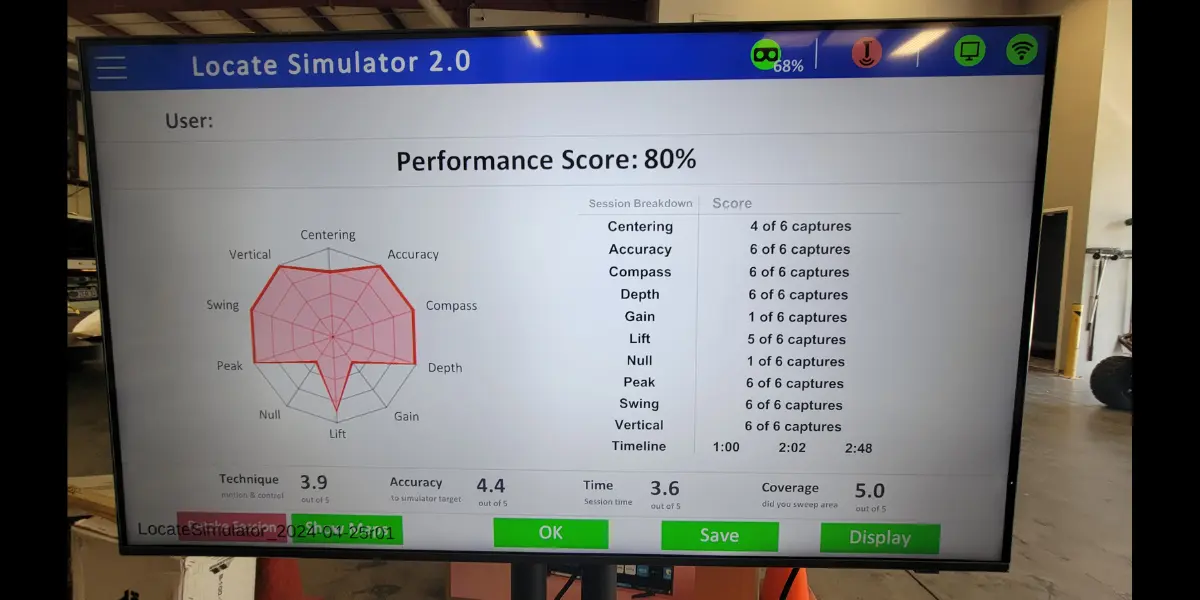
Utility locating is no different. Simulator-based training gives technicians the opportunity to build confidence, apply knowledge, and develop sound decision-making before the stakes become real.
Knowledge Is Only the Beginning
Understanding utility locating principles is essential. But knowing what to do isn't the same as knowing how to do it under real-world conditions.
Field performance requires technicians to:
- Interpret locator signals accurately
- Evaluate changing site conditions
- Apply industry best practices consistently
- Make informed decisions under pressure
- Communicate effectively with excavators and project teams
These are practical skills that improve through repetition, experience, and application—not lecture alone.
A Safe Place to Learn
One of the greatest advantages of simulator-based training is that it creates an environment where technicians can learn through practice without the consequences of making mistakes on an active jobsite.
Participants can:
- Practice locating techniques repeatedly
- Experience realistic field scenarios
- Build confidence using locating equipment
- Improve troubleshooting and critical thinking
- Learn from mistakes in a controlled environment
By the time they encounter similar situations in the field, they've already developed the experience to respond with greater confidence.
Building Consistency Across the Workforce
Simulator-based training doesn't just benefit individual technicians. It helps organizations build more consistent teams.
When every participant works through the same scenarios, follows the same best practices, and develops the same foundational skills, organizations create a common standard for performance.
That consistency can lead to:
- More reliable locating practices
- Improved communication across crews
- Stronger adherence to safety procedures
- Reduced variation between technicians
- Greater confidence in workforce readiness
For employers, consistency is often just as valuable as technical knowledge.
Experience Before the Consequences
No simulation can replace real-world experience, but it can dramatically improve how prepared technicians are before they enter the field.
Instead of learning critical lessons during active projects—where mistakes may result in utility damage, project delays, or safety incidents—technicians gain practical experience in an environment designed for learning and improvement.
The result is a smoother transition from classroom instruction to field performance.
Training That Builds Confidence
The most effective training programs don't simply transfer knowledge, they build confidence.
When technicians have the opportunity to practice realistic scenarios, reinforce proper techniques, and receive feedback in a controlled setting, they're better prepared to make sound decisions when accuracy matters most.
That confidence carries into every locate, every project, and every interaction with customers and excavators.
How GeoPoint Academy Helps
GeoPoint Academy combines NULCA-accredited instruction with simulator-based learning to help utility locating professionals build the confidence and practical experience needed for real-world field performance.
Designed and delivered by active industry professionals, our programs give organizations a standardized approach to workforce development, helping crews strengthen decision-making, improve consistency, and prepare for the realities they'll face on the job.
Whether you're training new technicians or investing in experienced crews, GeoPoint Academy helps bridge the gap between classroom learning and field performance.
Explore our training programs or contact our team to learn more about private workforce training for your organization.