
The Utility Locating Training Gap: The difference between trained and field-ready crews.
The utility locating industry has never been more important or more demanding.
As infrastructure expands, projects accelerate, and experienced professionals retire, organizations face growing pressure to develop crews that can perform safely, consistently, and confidently from day one.
The challenge isn’t simply getting technicians through training. It’s ensuring they’re truly field-ready.
Too often, training is treated as a milestone to complete rather than a foundation for long-term workforce performance. While certifications and classroom instruction play an important role, they don’t always prepare technicians for the realities they’ll encounter in the field.
When the consequences of a mistake can include utility strikes, service interruptions, project delays, or safety incidents, organizations can’t afford to mistake course completion for workforce readiness.
What Does Field-Ready Really Mean?
A field-ready utility locator does more than understand locating principles.
They can apply that knowledge under real-world conditions by:
- Making confident locating decisions in the field
- Interpreting signals accurately in varying environments
- Recognizing potential risks before they become problems
- Following consistent best practices across every locate
- Communicating effectively with excavators and project stakeholders
These are the skills that improve performance, strengthen safety, and help protect critical underground infrastructure.
The Hidden Cost of Inconsistent Training
Many organizations develop crews through a combination of onboarding, shadowing experienced technicians, and on-the-job learning. While these methods have value, they often create inconsistencies in how work is performed.
Without a standardized training approach, organizations may experience:
- Different locating techniques from one technician to the next
- Increased risk of utility strikes and rework
- Greater liability exposure
- Reduced confidence among newer employees
- Inconsistent service quality across crews
Over time, those inconsistencies can affect productivity, safety, customer confidence, and operational performance.
Why Practical Experience Matters
Utility locating is a hands-on profession. Classroom instruction builds foundational knowledge, but field performance depends on experience—knowing how to assess conditions, interpret signals, recognize challenges, and make sound decisions in real time.
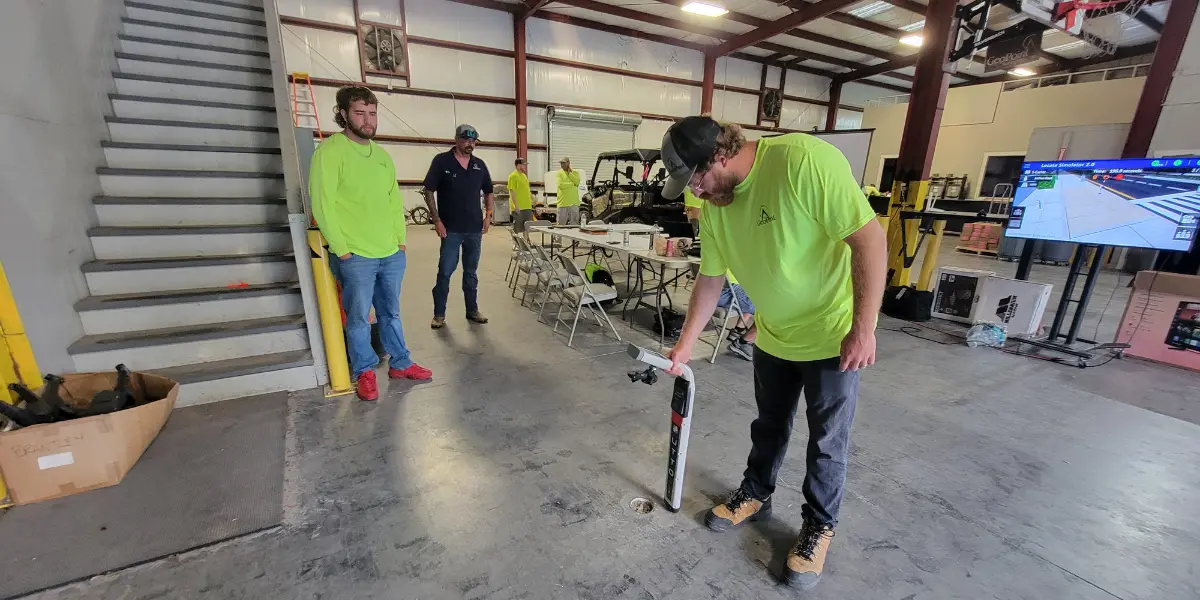
That’s why practical learning experiences, including simulator-driven instruction, play such an important role in preparing technicians before they enter the field.
By practicing realistic scenarios in a controlled environment, crews build confidence, strengthen decision-making, and gain valuable experience before those skills are tested on an active jobsite.
Measuring What Really Matters
Organizations often ask: “Did everyone complete the training?”
A more valuable question is:
- Are our crews working more consistently?
- Are technicians making better decisions in the field?
- Have we reduced preventable mistakes?
- Are we strengthening our safety culture?
- Do employees feel confident performing their work?
Those are the outcomes that create long-term value, not simply earning a certificate.
Closing the Gap
Closing the utility locating training gap requires more than adding another course to an onboarding checklist. It requires a commitment to developing professionals who are prepared for the realities of the job, not just the requirements of the role.
Organizations that invest in standardized, practical training build more than qualified employees. They build safer crews, improve operational consistency, reduce risk, and strengthen workforce performance for the long term.
How GeoPoint Academy Helps
GeoPoint Academy was created to help close the utility locating training gap through NULCA-accredited, simulator-driven instruction built by active industry professionals.
Our programs combine recognized industry standards with practical, hands-on learning to help organizations develop field-ready utility locating professionals who perform with confidence, accuracy, and accountability.
Whether you’re onboarding new technicians or investing in the continued development of experienced crews, GeoPoint Academy provides training designed to prepare professionals for the conditions they’ll actually face in the field.
Explore our training programs or contact our team to learn more about private workforce training for your organization.